 Flora is a paralegal living the life in London. She’s convinced she loves it and doesn’t regret leaving where she grew up, the (fictional) island of Mure north of Scotland. She hasn’t been back for several years after leaving under a dark cloud of some sort. When a very odd work assignment sends her back—still against her wishes—she’s reacquainted with her dad and brothers. We learn pretty quick that her mom died earlier and it was after her funeral when Flora had left.
The island cast is full—there’s Flora’s gruff dad, her teasing brothers, her young niece who yells all her words, an old friend to commiserate with about men, the uber-rich American who’s bought a chunk of the island and pissed everyone off in the process, a giant and cuddly love interest. And of course Joel, Flora’s boss in London who she’s had a hopeless crush on since she started working there, visits on several occasions. There’s ceilidh dancing, mountain hiking, a thing with a whale. If you like things Scottish, all this will appeal to you.
Flora’s cool and I liked her brothers and the rich American. I wasn’t as big on Joel, but I guess a lot of women find jerky men attractive if they have some vulnerability, which he does. We eventually find out what terrible thing Flora did before she left Mure the last time. She finally really makes amends with her family in a satisfying way.
So overall, it was an enjoyable read. There were some things that bugged me about the book, however. The first was a stylistic choice that surprised me because it wasn’t there in The Little Bookshop on the Corner, another of Colgan’s novels that I really liked. Specifically, I’m talking about head-hopping—shifting points of view from one character’s to another within the same scene. Now, there are some popular authors who do this (I can think of Nora Roberts and Beverly Jenkins), but it personally drives me crazy. I like deep point of view and generally prefer only one character’s perspective, though I can handle switching between characters if we’re talking about the entire scene. She switches not only in the same scene, but sometimes in the same sentence:
Obediently they breathed, Joel thinking crossly about money, Flora enjoying the fresh air but wondering why Colton appeared to think it all belonged to him.
I know there is omniscient point of view, where the author can get in anybody’s head, but that needs to be established early on, in my view. This book is solidly in Flora’s point of view about 97% of the time.
The other thing has to do with the island culture. I understood that the island was far to the north of Scotland. At one point they make a reference to Reykjavik being closer than London, which means it’s pretty far out there. But Colgan has the island fully Gaelic, with people speaking the language and living the culture just as they do on the Western Isles. But the northern islands off Scotland aren’t Gaelic—they’re more influenced by Norwegian culture and have a language called Norn that came from Norse. So then I thought, okay, maybe it’s way to the north of the Western Isles rather than the mainland of Scotland… but then near the end of the book she mentions people speaking Norn. Gaelic and Norn don’t coexist naturally (there are efforts to bring back Gaelic all over the country, so maybe now there’s some of that).
Anyway, enough complaining. If head-hopping or weird cultural mash-ups bug you, maybe skip this one. But if they don’t, it’s a sweet story.
 Too Good to Be True is a standalone from Higgins. It features Grace Emerson, whose fiancé dumped her weeks before their wedding and later starting dating her younger sister (technically with Grace’s blessing, but she didn’t like it). The book opens with a wedding, a favorite setting for Higgins, where Grace is dateless and ashamed of the way her family pities her and worries over the whole ex-fiancé-dating-the-sister thing. She invents a boyfriend to make everyone (and herself) feel better.
 At 26, Roscoe Winston is the youngest of the Winston clan and a vet(erinarian) in Nashville. We’ve also seen him to be a bit of a flirt in previous books. We come to learn why he’s that way, and how he’d had his heart broken in high school by Simone Payton.
 Beauty and the Mustache is the fourth in the Knitting in the City series and effectively book 0 in the Winston Brothers series. For those of you familiar with the Winston Brothers brothers series, this book feels more a part of that one than Knitting in the City, even though the knitting group makes multiple appearances, as do Nico and Quinn.
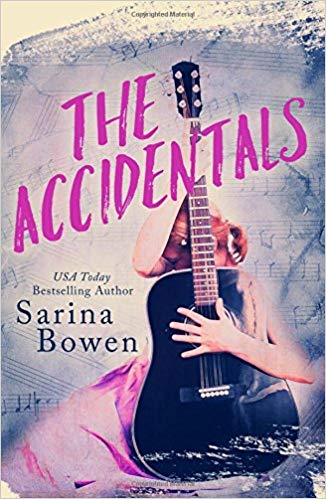 This will only be the second time I’ve reviewed a young adult title on here, but I couldn’t not review Bowen’s first foray into YA. And The Accidentals is a romance, after all. Just like all of Bowen’s books, there’s more going on than the romance.
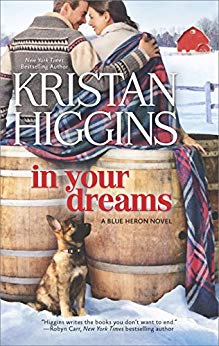 Here’s another Blue Heron book with a dog (the heroine’s)—and a cat (the hero’s) this time, which made me extra happy, as I’m more of a cat person. This is Jack’s book—the brother of all the Holland women paired off in the first three books of the series. With this one I finish off the series (I read them out of order), and I’m sad it’s ending. Higgins is as funny and real as she normally is.
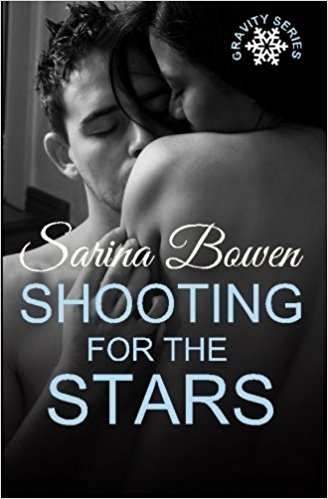 In this third and final installment of the Gravity series, Bowen gives us Stella Lazarus and Bear Barry. Anyone who’s read the second book will already know these characters because Stella is Hank’s sister and Bear is his best friend who has stuck around while Hank’s adjusting to his new life in a wheelchair. This book runs in parallel to book 2.
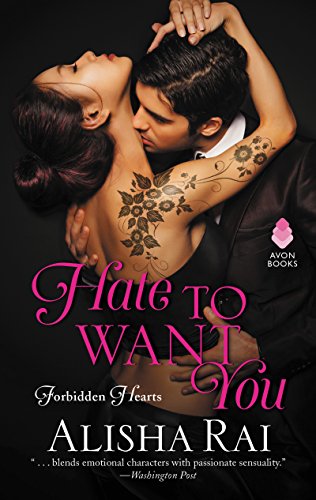 Hate to Want You is a complex novel with a bucketful of family secrets.
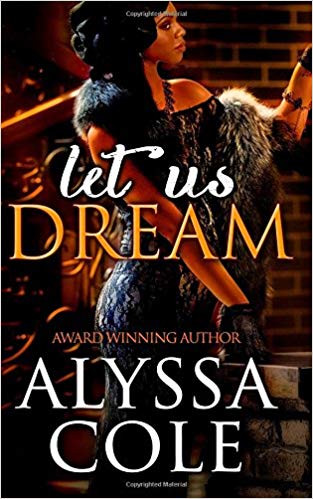 Let Us Dream is another slim but packed novel like Cole’s Let It Shine—and it’s equally good. This one’s set 50 years earlier, in 1917 Harlem. The heroine is Bertha Hines, a cabaret owner who has a secret that keeps her constantly nervous and a past that keeps her fairly buttoned-up. Amir Chowdhury is a Muslim Indian in the U.S. illegally, trying to make his way.
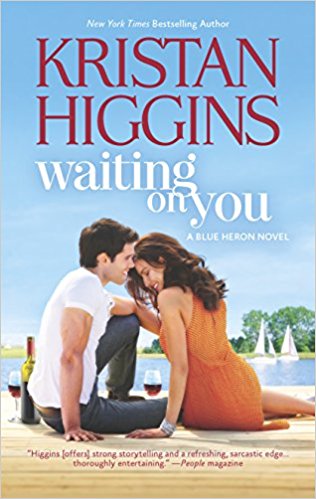 I devoured this second-chance romance in a day because I had to see how everything played out. This is the third in the Blue Heron series and is Colleen O’Rourke’s story.
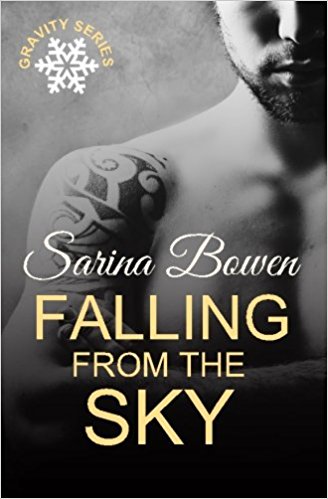 This is another sports-themed winner from Bowen. As the second in the Gravity series, it’s still snow sports. Hank “Hazardous” Lazarus is a renowned snowboarder on his way to the Olympics and Callie Anders (who we know from the first book in the series—she’s Willow’s doctor friend) meets him at the beginning of the book right before he mistimes a jump and gives himself a serious spinal injury. She ends up seeing him in the hospital not long afterward, when it’s not clear if he’ll walk again.
 This is a slightly weird book. Not that that’s a bad thing, but it is a thing. That’s because of the hero, Alex Greene, who’s got some serious secrets. He also lacks social skills, but not in the normal socially-awkward way. No, his confidence is fine. He just behaves weirdly at times, like looking at people slightly too long and intensely when he’s taking their order at the restaurant he works at.
 So despite some of my earlier reservations, I’m clearly a Higgins fan now since I can’t stop reading her books.
 Here’s another installment of my favorite series. Needless to say, I was excited to read it and pretty much devoured it in two days. This one is May Shipley and Alec Rossi’s (Zara’s brother) story.
 Let It Shine is a slim book, coming in at a little over 100 pages, but it doesn’t feel short. I mean that in the good way—it’s complex and substantive and I really enjoyed it.